Summary:
Dr Matthew Henricks MAPS, winner of the 2025 APS Entrepreneur of the Year Award, sees several reasons why psychologists are well-suited to entrepreneurial work:
-
Systemic thinking, particularly among organisational psychologists, is a natural foundation for designing scalable interventions.
-
The scientist–practitioner model equips psychologists to test ideas, adapt quickly and build evidence-based ventures.
-
A deep understanding of human behaviour allows psychologists to address not just the problem, but the psychological architecture surrounding the problem.
-
See all the other 2025 Award winners here.
Learn how APS's Entrepreneur of the Year, Dr Matthew Henricks MAPS, turned psychological insight into social change on a global scale.
When Dr Matthew Henricks MAPS first encountered the Helping Hands Program at a corporate event more than a decade ago, he had no plans to become an entrepreneur.
He was, by his own description, “a back-of-house, analytical guy” – an organisational psychologist who specialised in systems design, policy and due diligence work. Yet within a few hours of seeing the program in action, something shifted.
“It lit something up inside me,” says Dr Henricks. “I remember thinking, I’ve found the thing I was put on the planet to do.”
What began as a spark of curiosity has since grown into one of Australia’s most influential examples of applied psychology entrepreneurship.
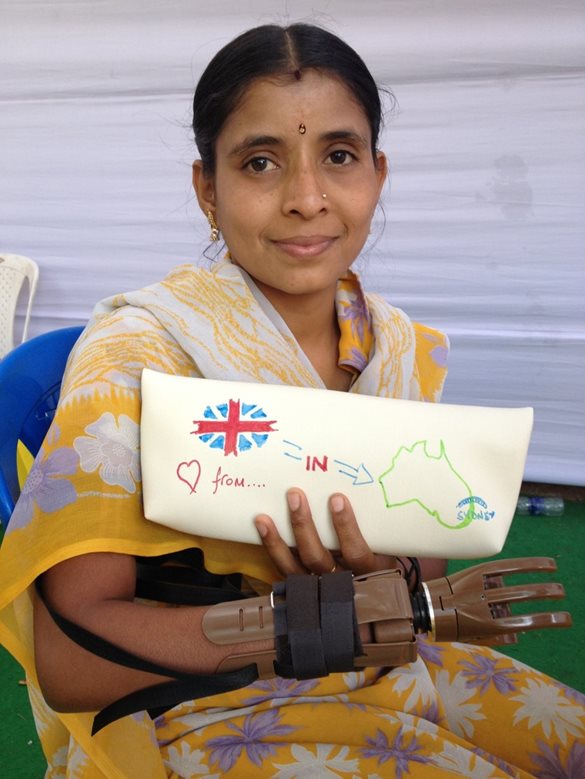
Through Helping Hands and Water Works, the two social-impact enterprises businesses Henricks has established and scaled in Australia, more than 27,000 prosthetic hands have been built and donated to amputees in over 80 countries, and over 120,000 people in refugee camps have been protected from water-borne disease through community-led filtration systems.
This year, the development of these two businesses earned him the 2025 APS Entrepreneur of the Year Award, recognising not only the extraordinary global impact of his businesses, but also the psychological design principles at the heart of them.
For Henricks, the work has never been about commercial success. It has always been about purpose.
“I think we’re all born with a sense that we’re here to do something significant, that the world will be a better place because we’re in it,” he says. “But as we grow older, we often convince ourselves that we were born to be ordinary."
These two projects gave Dr Henricks a visceral reminder of that early belief, and a chance to help other people rediscover that same feeling.
Discovering a model that blended meaning with psychology
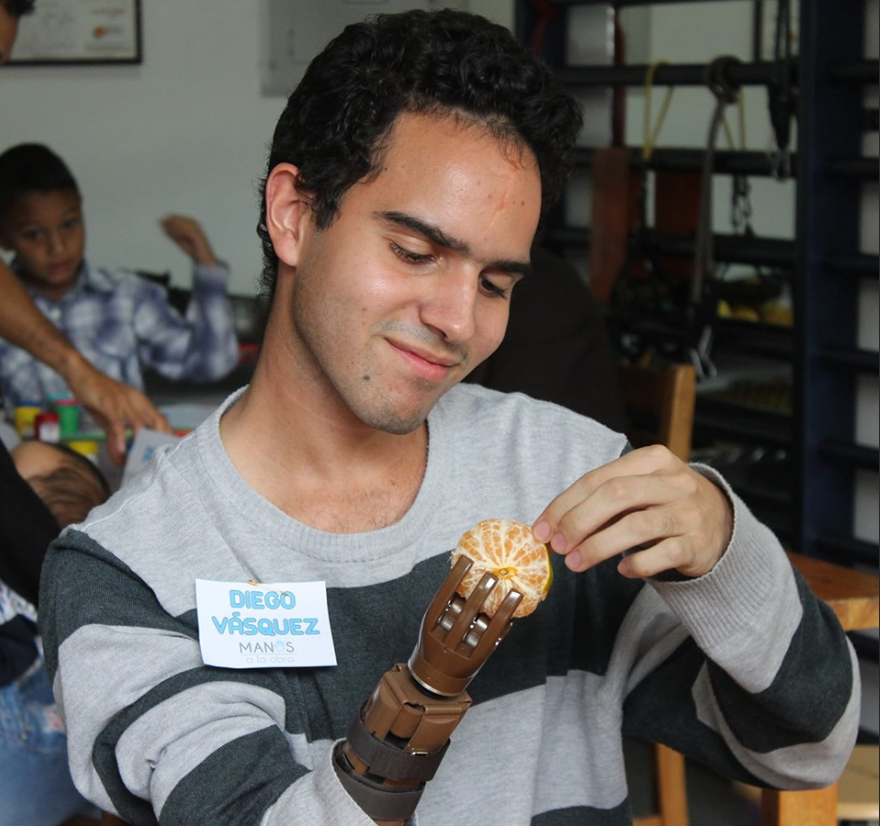
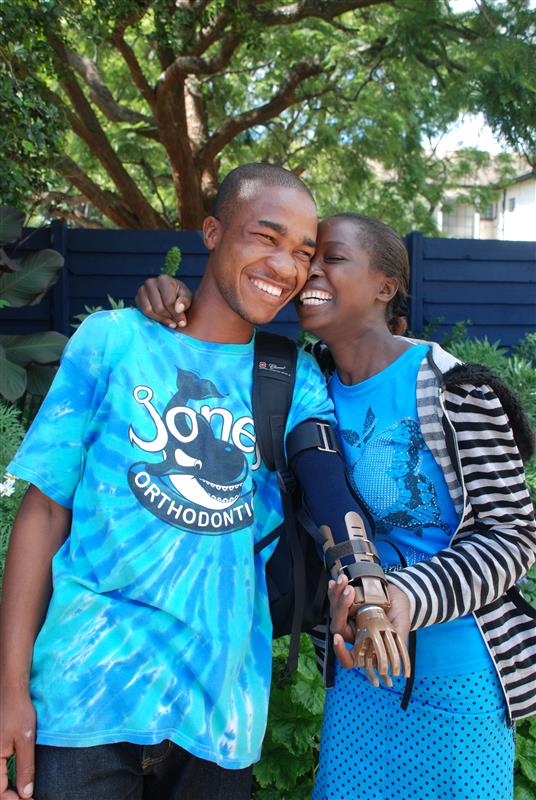
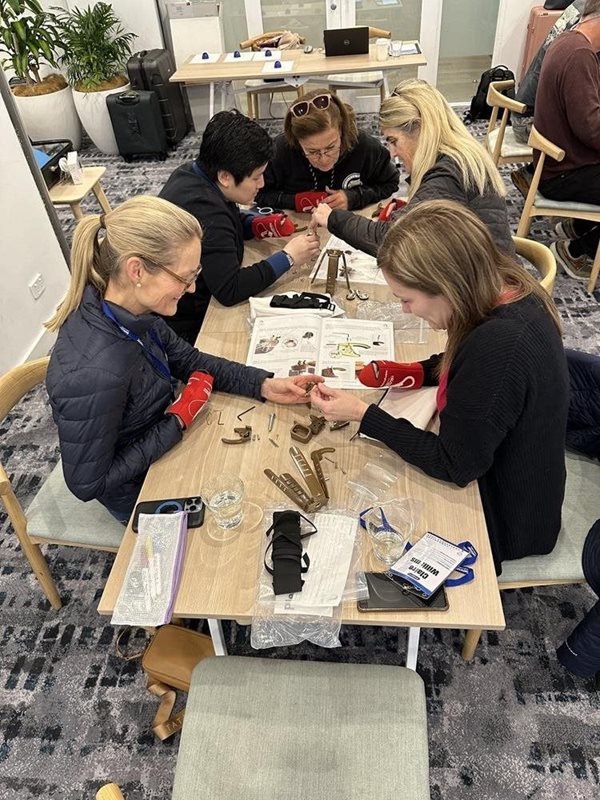
The Helping Hands Program, was designed around a deceptively simple idea: participants assemble a real, fully functional prosthetic hand from 30 pieces of plastic and metal, then prepare it for distribution to someone who has lost their hand, often via natural disaster, war or injury.
"The hand was initially designed by a grieving father, Ernie Meadows," says Henricks. "Ernie envisaged the hand to be a living memorial for his daughter, Ellen Meadows, who tragically passed away at an early age.”
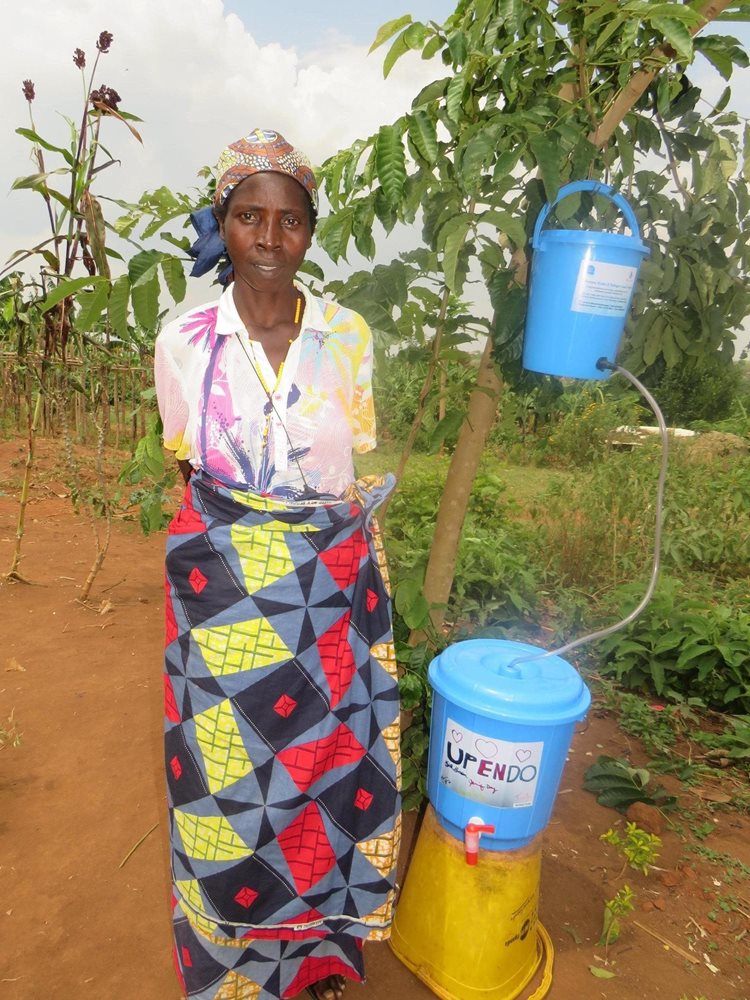
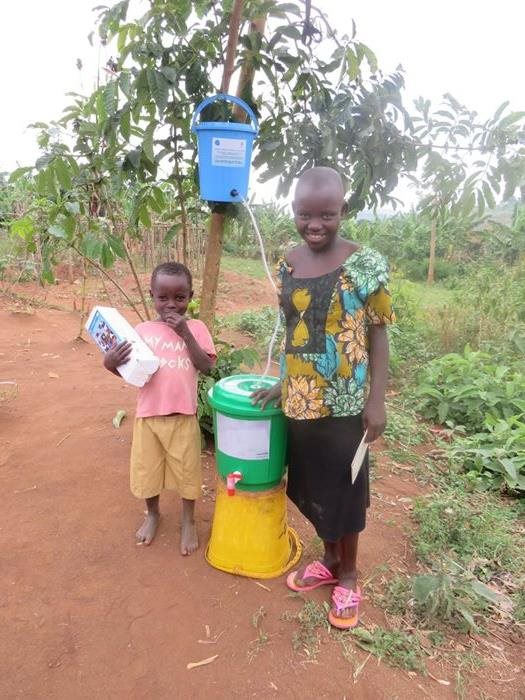
Water Works follows a similar approach, but the workshop participants work towards building a water filtration system to support the prevention of water-borne diseases.
"Water Works supports the trailblazing work of an existing charity called Life Water, which had already been operating for over a decade prior to when I became part of the process."
The idea of both projects is that corporate teams, or a group of any size seeking bonding experience, come together to participate in these workshops.
Both activities can be delivered to large groups. As an example, the biggest group that has participated in Helping Hands within Australia was over 2000, and overseas they once filled the Denver Convention Centre with 24,000 people.
Dr Henricks recalls the early days of Helping Hands. He spent months introducing the American founder to what he thought were “more suitable” people who were already running team building and leadership development companies in Australia.
“I remember saying to the American Founder, ‘I’m not a trainer. I’m an analytical guy.’ And he said, ‘You’re the one who’s passionate. Why don’t you give it a go?’”
That question, and the subsequent leap of faith that followed, would alter the trajectory of Dr Henricks’ professional life.
Turning psychological principles into lived experience
What distinguishes Henricks’ approach is the depth of psychological thinking embedded in the design of both Helping Hands and Water Works.
These are not your run-of-the-mill corporate team-building exercises. They are systemic psychological interventions that are delivered experientially.
Participants are not simply told about purpose, collaboration, resilience or meaning. They experience these concepts firsthand.
“The emotional journey is what makes the learning stick," says Dr Henricks.
In Helping Hands, participants build the prosthetic hand using their non-dominant hand, sheathed inside a stubby holder to mimic the experience of sudden physical limitation.
In Water Works, they assemble a water-filtration system blindfolded, in order to raise awareness about avoidable blindness caused by trachoma, a condition easily prevented by washing one’s face with clean water every day.
.JPG)
These disabilities are not gimmicks. They are psychological devices designed to evoke empathy, vulnerability, shared problem-solving and a heightened sense of purpose. They also disarm the cynicism that often accompanies corporate learning environments.
Dr Henricks has seen it countless times: the wary expressions, the crossed arms, the memories of “trust falls” and contrived team activities. But something shifts the moment people realise the work they're doing in these workshops is real.
“There’s a point where they move from cynicism to inspiration, then to feeling completely daunted when they realise the task ahead. Ultimately they experience an enormous sense of pride when they complete it,” he says. “That emotional rollercoaster creates the perfect conditions for more durable learning.”
The other aspect of the activities that Dr Henricks says make them such great learning opportunities is that participants are genuinely ‘in business’ together for the duration of the workshop.
“There are real customers who will receive a real product with real quality requirements,” he says. “In order to assemble that product, participants need to [navigate] real team dynamics.
“These workshops mimic the world of work in every way; it’s just that participants are working with a different product and serving different customers than they’re used to. Once participants accept the notion that they are genuinely in business together and not involved in some kind of contrived training simulation, it’s far easier for them to see the parallels between the activity and their own work.
“It’s incredibly fertile ground for self-reflection and creates memorable and profound insights that stay with learners for years.”
.JPG)
Lessons in collaboration, strengths and the ‘dark side’ of our best selves
At the end of a workshop, participants feel they have performed at their absolute best: engaged, purposeful, energised and prosocial. And yet, as Dr Henricks points out, that is often when our blind spots are most evident.
“Often when we’re at our best, we’re very close to being at our worst,” he says. “Your greatest strengths always cast a shadow. Especially when you are under pressure."
For example, under pressure, detail-focus becomes perfectionism, he says. Motivation becomes competitiveness. Purpose-driven becomes tunnel vision.
To demonstrate this, Dr Henricks often structures each workshop so that the “real” learning becomes visible only in hindsight.
For example, each small group often works intently on 'their' prosthetic hand – purpose-driven, focused, committed – while missing the fact that there are 20 hands to build but only 18 teams. A production-line approach, or even pooling materials, would produce far better outcomes. But in the heat of the moment, feeling engaged and purpose-driven, people default to working in silos and can even become competitive.
It’s human nature that when we are at our most engaged, our most focused, that we can sometimes struggle to see the big picture, says Dr Henricks.
“They will usually slip into non-collaborative behaviour without realising it,” he says.
One of the differentiators of the program is that these counterproductive behaviours are explored in positive terms.
“It can often be the source of extreme dissonance for people to realise that it was the good in them, not the bad, that led towards tunnel-visioning on the hand in front of them.
"Once people realise that a lack of collaboration doesn’t necessarily stem from a negative place, it becomes much more palatable to accept that they personally might have some opportunities for improvement when working in teams. Up until that point, the temptation [can be] to point the finger and blame someone else.
Apart from collaboration, there are a wide range of themes that Dr Henricks often explores with his clients during the debrief, such as:
- The powerful difference a sense of purpose can have on the way we feel, think and behave at work.
- Employee engagement and its dark side.
- Reflections on leading change and overcoming resistance to change.
- Design thinking and customer centricity.
- The disproportionate impact on our coworkers that seemingly insignificant choices (like the way we choose to greet each other or sign off our emails) can have.
- Fostering a safety culture by reconnecting with the 'why' behind safety.
He takes the time to follow up with clients about the results they have achieved after his events.
“The main difference with these programs is the durability of insights gained by participants. Both Helping Hands and Water Works are such memorable activities to be a part of that participants can’t help but recall the themes we discussed, and often proactively find themselves telling their coworkers, friends and family members [about the program], sometimes many years after the activity was held.”
Scaling compassion: The global reach of two purpose-driven enterprises
As impactful as the learning experience is, the humanitarian outcomes are what move participants most deeply, and what has kept Dr Henricks committed to the cause for more than a decade.
Water Works now protects more than 100,000 people in Uganda’s Kyaka II refugee settlement alone. Every filtration system is accompanied by local governance structures, training and monitoring – a model Dr Henricks helped design in partnership with the charities he collaborates with such as Oxfam and Life Water.
“It doesn’t matter how many times I go into the field. I always arrive thinking I’m going to be the one helping, only to walk out realising how much I’ve learned from the communities themselves,” he says.
He describes, for instance, meeting a man in India who received a prosthetic hand, only to give it away two hours later on his journey home when he encountered a young mother with no hands and two children.
“'She needed the hand more than I did,' the man said, and in that moment he gave up what must have been his most valuable possession without so much as a second thought," says Dr Henricks.
He recounts the story not to romanticise sacrifice, but to illustrate the profound levels of generosity and perspective he has witnessed while working among his colleagues in the field.
“Often the people who have the least in this world are the most generous with what little they have,” he says.
That humility is what led him, in 2024, to transition into an advisory board position with both Helping Hands and Water Works. Both projects are now run by a registered training organisation which he hopes will be capable of growing both projects beyond what one psychologist could manage alone. Both enterprises now operate globally, supported by over 200,000 past participants and hundreds of trained facilitators.
Why psychology is the missing ingredient in social innovation
Dr Henricks believes the psychology profession is uniquely positioned to lead the next wave of social entrepreneurship, despite many psychologists potentially not yet seeing themselves in that way.
“Some of the biggest challenges society faces are inherently psychological,” he says. “If there aren’t multiple significant enterprises waiting to be founded in our field, I’d be incredibly surprised.”
He sees several reasons why psychologists are well-suited to business:
- Systemic thinking is a particular strength among organisational psychologists, and is a solid foundation for not only designing scalable interventions, but also scalable enterprises.
- The scientist–practitioner model encourages psychologists to be objective and take an evidence-based approach to innovating, testing ideas, then adapting our approach based on data.
- A deep understanding of human behaviour enables psychologists to not only identify market needs that others may not have identified (in terms of products and services), but also to consider the social architecture required to ensure the successful implementation of their ideas.
He believes psychologists especially underestimate their value in both commercial and social-impact settings.
“In both Helping Hands and Water Works, the registered charities I partnered with already existed,” he says. “What they needed help putting in place was the social architecture to take things to the next level. Someone to understand the community dynamics, prevent unintended harm, design for equity and create systems people could trust.”
For psychologists considering their own entrepreneurial path, Henricks offers reassurance.
“Don’t assume that taking on that role of being a humble, quiet practitioner in the background is the only way to be a psychologist,” he says. “I would encourage all psychologists that have a good idea to back themselves.”
“There is an enormous need in the world for people who can think systemically, empathise deeply and build evidence-based solutions at scale. Psychologists are trained for this, even if they don’t realise it yet.”
APS will be profiling more of the 2025 APS Award winners in 2026. You can explore their profiles here.
Images supplied.