Article summary
- Psychologists should embrace being "perfectly imperfect," acknowledging knowledge gaps and treating the client as the expert in their own cultural story.
- A practice’s physical space – including diverse art, multilingual brochures, and a diverse clinical team – serves as an immediate indicator of cultural safety.
- Many assessment tools were normed on Western populations; using them on CALD clients can lead to inaccurate interpretations.
- Standard therapies like CBT and ACT do not need replacement but may require tweaks, such as replacing Western content with analogies that align with a migrant’s experience.
- Dr Khawaja advocates for embedding diversity and the limitations of Western theories across the entire university curriculum from year one, rather than as a standalone subject.
Cultural safety requires moving beyond static ‘competence’ towards a lifelong practice of reflexivity. By acknowledging clinical gaps and adapting Western frameworks, psychologists can better serve Australia’s multicultural reality.
If a client presented to your clinic expressing a paralysing fear of driving on a specific local road, your clinical intuition might immediately pivot toward a diagnosis of specific phobia. You might explore a history of vehicular trauma or apply a standard cognitive restructuring and exposure model.
However, as Dr Nigar Khawaja FAPS – recipient of the 2025 APS President's Award for Distinguished Contribution to Psychology in Australia – illustrates, the “standard” approach often misses the underlying reality for many culturally and linguistically diverse (CALD) and Indigenous clients.
In the example above, she recalls a group of truck drivers belonging to an Indigenous community who expressed a fear over using a newly developed road.
"The symptoms were very much like a phobia. They would panic and they would stop the trucks and they would just refuse to drive," says Dr Khawaja, who is a clinical psychologist and Adjunct Professor at the Queensland University of Technology.
They were reacting this way, she says, because the road was built on a sacred site. They believed ancestral spirits had been disturbed, and their phobic symptoms were, in fact, a culturally grounded response to spiritual transgression.
"Our regular method is not going to work here because the trigger – the cause – is deeply cultural," says Dr Khawaja. "If we don't bring in a cultural intervention, we won't be successful."
This anecdote serves as a potent reminder for psychologists: cultural safety is not a bolt-on skill. It requires a fundamental shift from seeking cultural competence to practising reflexivity.
From competence to reflexivity
The profession is moving away from the term "cultural competence", says Dr Khawaja.
The term implies a destination – a peak one reaches and then stops once they have “become competent”. Reflexivity, however, is a circular concept, an ongoing process of self-appraisal, personal and professional growth and development, she says.
"Psychologists need to continuously focus on the impact they are having on another person," says Dr Khawaja. "We have to be 'double mindful' when the two people in the room are from different backgrounds – cultural, ethnic or racial."
Designing culturally safe practices
While there are many considerations to keep in mind when designing culturally safe experiences for clients – and this article will only be able to touch on a small portion – Dr Khawaja is keen to stress that this is not about trying to reach a state of perfection.
"We really need to focus on cultural humility because we're not perfect," she says. "We're not going to understand every client and we're not going to be able to fill all the [knowledge] gaps. There are going to be gaps in our knowledge and skills and understanding – that's okay."
Excellence in psychology isn't about knowing everything; it’s about being comfortable with what you don't know and seeking the right consultation to fill those gaps, she says.
What matters most, she adds, is maintaining a high level of cultural humility and respectful curiosity. This involves being curious enough to learn from our clients – who are the experts of their own lives – and reflexive enough to embed this self-appraisal into day-to-day practice.
Dr Khawaja shares some considerations to keep in mind.
1. Audit your environment
Cultural safety is not merely a clinical technique applied during a session; it's an environmental commitment that begins long before the client even sits down.
As Dr Khawaja notes, a practice should serve as a "good reflection of the society" in which it operates. When psychologists align their professional surroundings with the multicultural reality of Australia, for example, they lower the barrier for those who might otherwise feel like outsiders in a traditional psychological setting.
The physical space of a clinic speaks volumes about who is welcome there, she says.
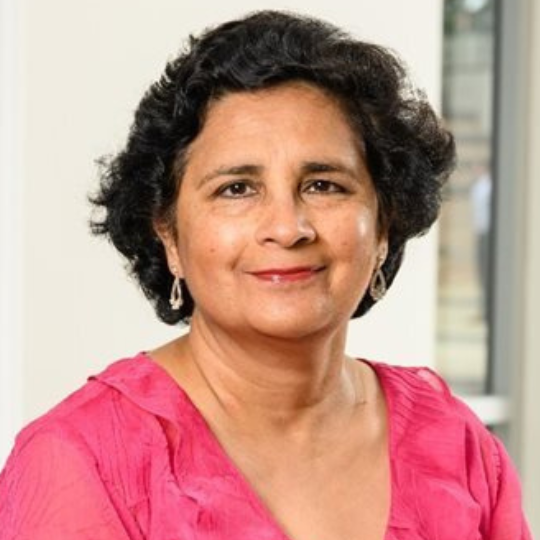
2025 APS Award Winner Dr Nigar Khawaja FAPS
"The space should be set up in a way that's not just [reflective of] Anglo-Saxon cultures. It might have art and features from different parts of the world," she says, adding that this can be a powerful visual cue of cultural safety.
Other safety cues could include displaying brochures/resources in a selection of different languages and ensuring that information is available in formats that are culturally and linguistically appropriate.
For example, for clients who may find traditional, text-heavy Western forms foreign or overwhelming, the psychologist might use diagrams, flowcharts or images to tell the story of their experiences.
Or rather than using standard Western metaphors, the psychologist might incorporate stories or analogies that reflect the client's migrant background and lived experience.
"For those who work in teams, it would be a good idea to have diversity among the psychologists – people from different backgrounds, different languages, different shades of the skin."
This representation matters because clients are often instinctively attracted to environments that "mirror their own reality".
While the majority of a team may come from a European background, having clinicians who reflect the broader society ensures that the practice doesn't feel like a "bubble".
Finally, true cultural safety requires psychologists to acknowledge the intersection of ethnicity and socio-economic status. A practice that is culturally responsive should also be financially flexible, says Dr Khawaja. This might involve:
- Tiered pricing: Implementing a fee structure that caters to different financial statuses, such as offering lower fees or phased payment approaches.
- External referral pathways: Having established arrangements to refer clients to other services if they cannot afford a practice’s high fees.
2. Utilise cultural consultants and interpreters
Psychologists are often trained to be the authority in the room. However, Dr Khawaja suggests that culturally safe practice requires a shift – one that embraces the "expertise" of the client and acknowledges the boundaries of Australian psychologists' Western-focused training.
When a clinician feels unsure about how to interpret a CALD or Indigenous client’s responses or experiences, Dr Khawaja recommends seeking a cultural consultant.
"You could have your supervisor as a cultural consultant," she notes, or you could seek out specialised Indigenous and or transcultural centres.
For example, Queensland has the Queensland Transcultural Centre, while New South Wales and Victoria have similar, well-established hubs (such as STARTTS) that provide access to cultural consultants. Similarly, there are experts and support services to deliver effective services to First Nation clients (for example the APS Aboriginal and Torres Strait Islander Peoples and Psychology Interest group).
By maintaining a list of cultural consultants or supervisors with specific expertise in, for example, Middle Eastern or Latino cultures, a psychologist can ensure they are equipped to provide safe and accurate care.
"In order to be able to equip ourselves to work with the CALD clients, we need to be mindful of all these things," says Dr Khawaja.
Another common misconception is that if a client speaks conversational English, an interpreter is unnecessary.
However, language is the vehicle for emotional expression and complex psychological constructs; when a client is forced to communicate in a second language, the subtleties of their experience can easily be lost.
While some practices may benefit from having a psychologist who speaks a community-specific language, the sheer number of language groups in Australia makes this impossible for every case, she says.
This is why bringing in professional, external interpreters can help in ensuring the psychologist is not missing critical nuances in how the client chooses to reveal information or express emotion.
We have to be 'double mindful' when the two people in the room are from different backgrounds – cultural, ethnic or racial.
3. Recognise the "apple to orange" assessment risk
In the clinical setting, the tools psychologists rely upon for accuracy – such as intelligence tests, personality inventories, and even the DSM-5 – are not neutral instruments; they are products of a specific cultural context.
"The problem is that a lot of the tests that are developed in the West have been tested and normed with Western population," says Dr Khawaja.
When a clinician evaluates a CALD client using these standard metrics, they are often comparing the individual against a general picture of how a Western population is expected to behave.
This can lead to a fundamental error in clinical judgment when working with CALD youth or adults.
"We're comparing somebody coming from Asia or the Middle East with a Western person, for example" she says. "This is a huge issue. We're comparing apples with oranges."
Without testing tools that have been designed across multiple populations, clinical interpretations can be become more complex – such as with the example she shared earlier regarding the Indigenous community's views on the newly built road.
A lack of cultural mapping can be evident in how depression and anxiety manifest. Dr Khawaja notes that many non-Western clients tend to "somatise" their psychological distress, presenting with physical symptoms rather than emotional ones.
"They tend to respond [share] physical [observations], like, 'I've got a headache; I've got pains and aches’ – it's very somatic."
In many cultures, medical concepts are far more familiar and less stigmatised than psychological constructs, she says.
"You could very easily go off the wrong track if you fail to recognise these as primary symptoms of psychological distress," she says.
To avoid misdiagnosis, clinicians must look beyond the textbook and acknowledge that what is considered "salient" or "important" in one community may look entirely different in another.
4. Tweaking models and frameworks
Dr Khawaja argues that psychologists do not necessarily need to invent entirely new psychological frameworks for CALD groups, as existing individual, group, couple and/or family interventions are emerging in the literature as effective.
These include major models such as cognitive behavioural therapy, acceptance and commitment therapy, narrative therapy, solution-focused therapy, emotion-focused therapy, interpersonal therapy, family systems therapy, and eye movement desensitisation and reprocessing therapy.
However, she stresses that these paradigms require "small tweaks" to truly resonate with culturally diverse clients.
"Sometimes even my mainstream clients don't like filling out the [CBT] form, so I don't use it or make an easier version of the model that better tells their story.”
According to Dr Khawaja, effective clinical modification could look like:
- Replacing Western imagery: In acceptance and commitment therapy, where exercises often rely on specific scenes or images, psychologists should use visualisations from the client’s own cultural background.
- Adapting analogies: Instead of standard Western metaphors, therapists can pick up stories and analogies from a migrant background that align more closely with the client's lived experiences.
- Demystifying jargon: Practitioners should simplify "foreign" sounding jargon and technical terms, opting for easier language that the client can actually use.
- Cultural strengths: Strategies where clients' existing cultural strengths and resources are used to help them with their current issues can be a powerful therapeutic tool.
"The paradigms are working," she says, but it is the "subtle changes that we introduce with our clients" that allow these frameworks to be successful in a multicultural context.
An embedded education approach
Dr Khawaja says the key to designing more effective culturally safe environments for clients should begin in the early phases of a psychologist's tertiary education.
Currently, diversity is often a "tacked-on" subject at some point in a degree. Instead, she argues that the "gap" in Western theories should be pointed out from the first year.
"The idea or cultural diversity and the fact that ‘one size does not fit all’, should be implanted in the student's mind from the very beginning and it should be across the board," she says.
Ultimately, Dr Khawaja’s vision for the next generation of psychologists is one that trades the pressure of perfection for the courage of curiosity.
"We are teaching students to be perfect, which makes it hard for them to accept they have a flaw or don't know everything," she says. "We need to help them be curious rather than just confident.
"They are just not going to know everything – and that’s okay," she says. "Only then can we truly improve."
By dismantling the unrealistic expectation of clinical perfection and embracing a curriculum that prioritises lifelong reflexivity, the profession can move toward a more effective therapeutic relationship with Australia’s diverse community.
Further resources: