Across an eventful third quarter, from July-September 2026, we're proud to have made significant progress in areas spanning advocacy, policy engagement, representation of the profession, and member support.
Our focus has remained unwavering. The APS's purpose is ensuring our members are heard, represented and considered in decisions that affect them, their clients, and the communities they support. The following represent some of the most significant outcomes for our members from our advocacy work this quarter, many of which have been achieved through consistent and persistent efforts over months and even years.
Here are some of the key ways we’ve represented our members in Q3
A win for students participating in prac placements
In July, we celebrated a significant advocacy win: the extension of the Commonwealth Prac Payment program to eligible psychology students enrolled in professional pathway courses leading to registration, from 1 July 2027. Building on years of sustained advocacy by the APS, along with the allied health sector, this change will assist in providing financial support to students who meet the Department of Education’s general eligibility criteria while completing mandatory placements. Find out more about the eligibility criteria.
Highlighting psychologists' role in ending violence against women
In our submission on the Second Action Plan to End Violence against Women and Children, and in attendance at a roundtable with Assistant Minister Kearney, we advocated for better access to trauma-informed psychological support and highlighted psychologists’ role in prevention and early intervention.
Engaging with the NDIS on behalf of our members
In August, the APS exhibited at the 2026 DSC Annual NDIS Conference in Brisbane, where we promoted the unique skills and capabilities psychologists provide to the sector. We also had the opportunity and privilege of joining people with disability, carers, providers, support coordinators, advocates, sector leaders, and APS members for two days of discussion about the future of disability support in Australia. We created and shared resources specifically focused on the role of psychologists in the NDIS to help foster an informed understanding during this period of immense change and reform. We also attended an NDIS Roundtable, with the NDIA CEO Graeme Head AO and Penelope McKay, Deputy CEO. Attendees were updated on progress across NDIS reforms, including pricing, new framework planning, and support needs assessments.
In September, we attended a roundtable with the Minister for the NDIS, Senator the Hon Jenny McAllister. At this roundtable, we engaged in discussions on the passing of the recent NDIS Bill, including the continuity of access to allied health supports, ensuring allied health involvement in functional capacity assessments, therapy support determinations, pricing, and workforce sustainability.
Presenting the Disaster Response Network (DRN) model
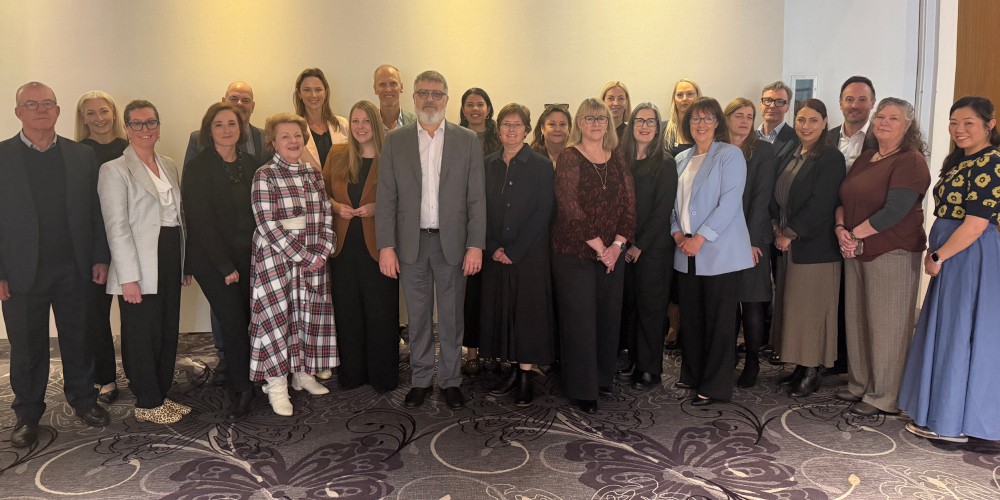
At the American Psychological Association (APA) Convention in August, we delivered a virtual presentation on the APS’s flagship Disaster Response Network (DRN) model to an international audience. The session highlighted how APS psychologists are supporting frontline, emergency and community facing workforces by building resilience, strengthening readiness and providing psychological support before, during and after disasters and collective trauma events.
Also in August, we launched the DRN Mental Health Leadership Information Session. Delivered by APS DRN psychologists, this one-hour session supports leaders to create mentally healthy workplaces and have supportive conversations about mental health during disasters and other significant events.
Ahead of the higher risk disaster season, the APS also met with government representatives in Queensland, the Northern Territory, South Australia and Tasmania to discuss the DRN. These conversations are helping more decision makers understand how the APS supports frontline workers and volunteers in the preparation, response and recovery phases of disasters and collective trauma events.
We're currently welcoming APS Members, with full Ahpra registration, to join the Disaster Response Network (DRN) and play a vital role in helping frontline and emergency workforces who step to support communities in times of disasters. Join the DRN to support those who support others. Learn more.
Advocating for veterans' access to psychology and allied health care
The APS welcomed the Department of Veterans' Affairs (DVA) announcement that it would not progress its proposed $5,000 annual threshold for veterans accessing allied health care. Prior to this announcement, the APS had worked with other psychology and allied health organisations in asserting our concerns about the proposed annual threshold, including in our representations to the Australian government.
The APS has been clear in our advocacy: veterans must be able to access the psychological and allied health care they need, for as long as it is clinically needed. You can read our statement here. We thank APS members who provided consultation feedback, which has informed our submission to a related DVA Funded Health Treatment Parliamentary Inquiry. This feedback will also be valuable in our future representations to DVA as we continue to advocate for a system that puts veterans’ wellbeing at the centre of decisions about their care.
Releasing our Thriving Kids position statement
In September, we worked in conjunction with the Australian Association of Psychologists Inc. (AAPi) to advocate for the meaningful inclusion of psychologists within the Australian Government’s new Thriving Kids model, warning that children and families could miss out on vital early intervention and support if psychological expertise is not embedded throughout the framework. Through a joint position statement and public advocacy, the APS highlighted the critical role psychologists play in early identification, assessment, mental health care, behavioural support and family interventions, while calling on governments, service planners and providers to ensure psychologists are integrated across all stages of the model to improve outcomes for children and reduce the burden on families seeking support. You can read more about our approach and read the full position statement here.
Responding to PsyBA Higher Education pathways consultation report release
We have continued to advocate for members throughout the Psychology Board of Australia’s (PsyBA) consultation on proposed reforms to psychology education and training. We welcomed PsyBA’s removal of the proposed psychology assistant role from the current reform agenda, consistent with APS advocacy.
However, unanswered questions remain about the proposed model and its implementation, including competency assurance, research and practitioner training, supervision and placement capacity, workforce impacts, and the future viability and supply of all nine areas of practice endorsement (AoPE). The APS has been directly asked by PsyBA to provide input into implementation considerations if the model is accepted by Government. We will continue to advocate that the reforms protect public safety, maintain high standards of training and support a sustainable psychology workforce. You can read our response here.
If you ever have questions about our advocacy work, you’re always welcome to reach out to us at [email protected].